
Practicing Safe-Play With Pets
I was hit with a wave of nostalgia last night while scrolling through my camera roll, back to when my now-big kids were barely crawling. Before kids, my phone was basically a shrine to my first-born (a.k.a. my fur-baby). Once my infant entered the chat, the photos just multiplied. Newborn and first-born, cozy and cuddly, roughly the same size, sharing blankets, floor space, and fresh air on our daily walks.
If you have a pet whether it’s a dog, cat, rabbit, bird, reptile, or any other beloved companion, you know how special the bond between kids and animals can be. When little ones are born into a pet-friendly home, pets often feel more like siblings than sidekicks. From the early days of newborn snuggles, they’re there for milestones, play sessions, and naptimes…unless, of course, they choose to loudly alert the household that the Amazon delivery driver has arrived right after the baby finally fell asleep.
As sweet as those moments are, the reality is that once babies turn into curious, eager, determined little monsters toddlers, the dynamic shifts. Tiny hands want to grab, climb, hug, poke, and (lovingly) squish. Pets, no matter how gentle, patient, or generally calm are still animals with instincts, boundaries, and limits.
That’s where intentional teaching, supervision, and structure come into play. Literally.
Safe play with pets isn’t about fear or restriction. It’s about respect. Respect for our kids as they learn how the world works, and respect for our animals who rely on us to advocate for their comfort and safety. Here’s how we approach it in our home, using play-based learning, clear boundaries, and a whole lot of gentle (and repeated) guidance.
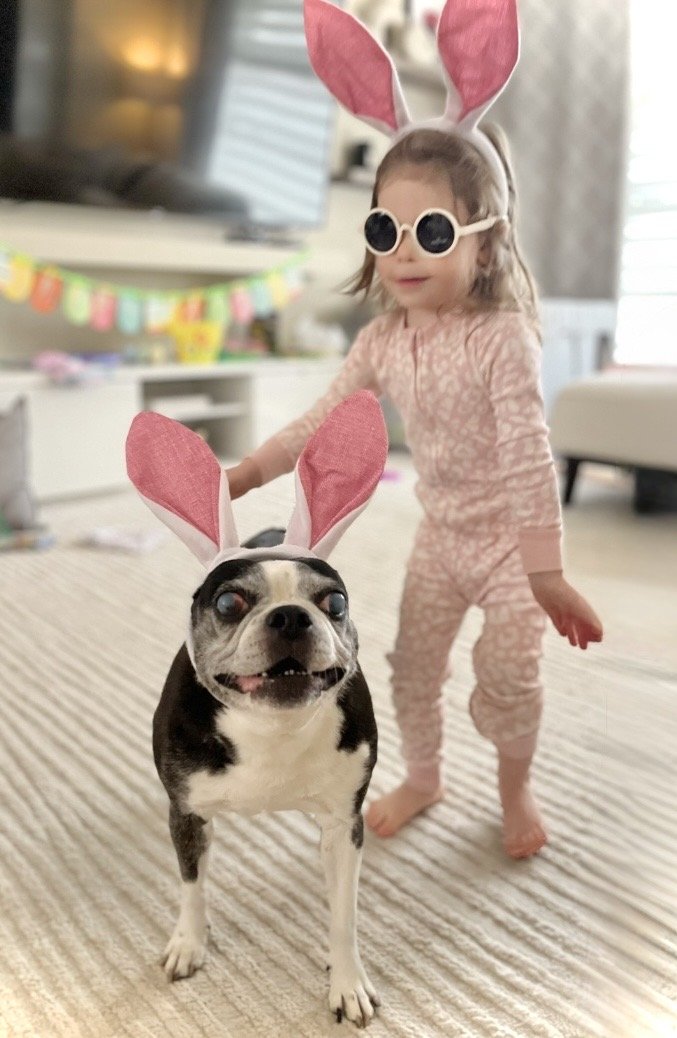
1. Play Only Happens When Parents Are Present
Even as toddlers grow more independent, play between kids and pets is always supervised in our home. Little ones love to mimic what they see us do, such as offering treats, filling water bowls, petting, and attempting cuddles that feel more like full-body tackles. Depending on the size of your pet, the tackling and the one actually getting tackled could go either way.
Toddlers want to help, and that’s an incredible thing, but they’re still learning they’re own strength. One thing toddlers and pets have in common? Neither communicates discomfort the way adults do. Your pet can’t say, 'That’s a bit much,” and your two-year-old can’t always articulate, “I’m overwhelmed.” Instead, both may freeze, flail, growl, cry, or react suddenly.
That’s where us grown ups come in.
A supervising adult can read cues early, step in gently, and model what respectful interaction looks like. This is especially important for aging pets or pets with sensory sensitivities. Changes in eyesight, hearing, or mobility can make even well-meaning touches startling.
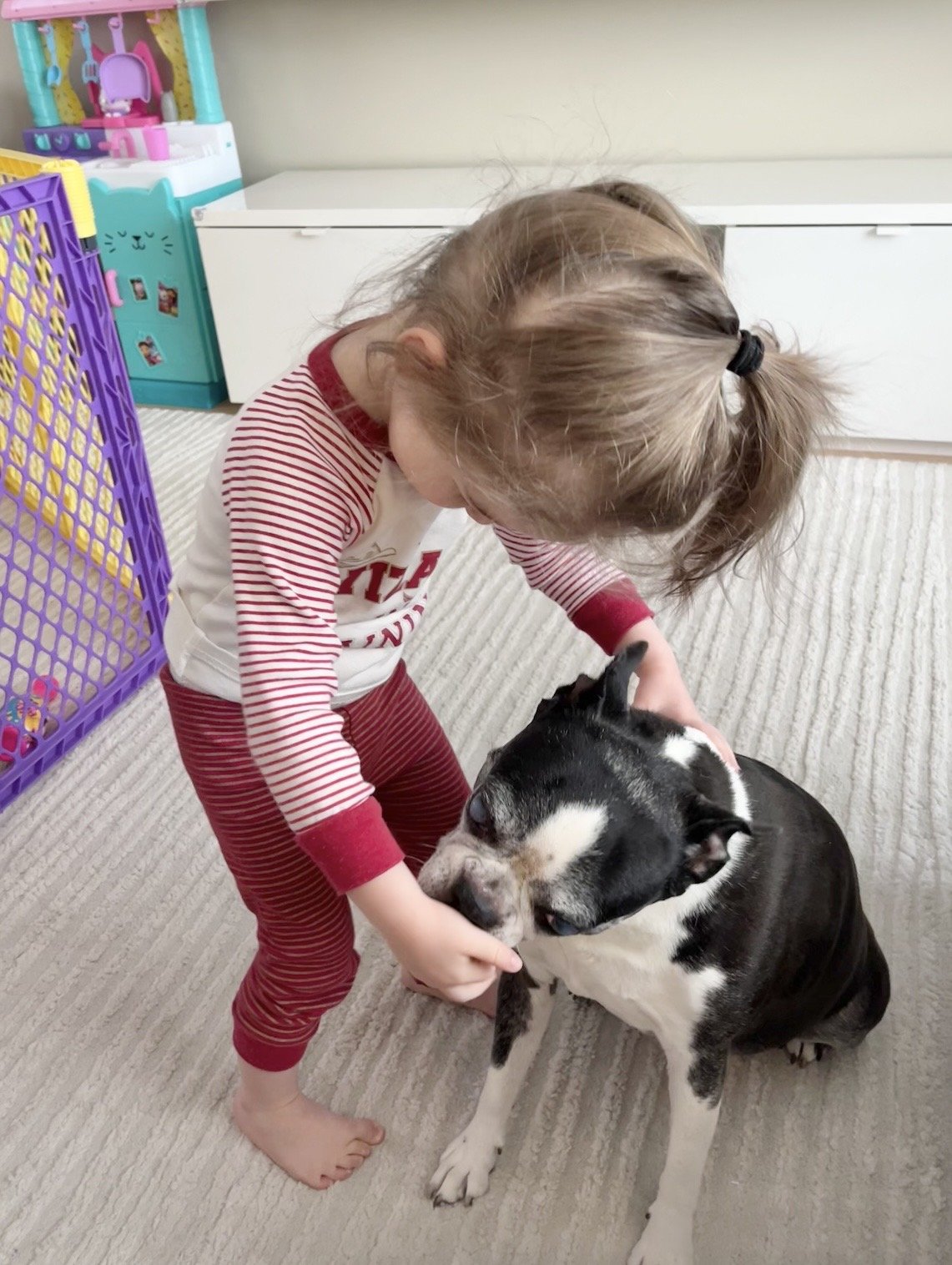
Our own pup started to lose her hearing a few years back. Since her senses were not always what they used to be, we taught our little ones to let her recognize them by getting her to smell their hands first and wait for acknowledgment before touching. It’s a small step that made a big difference.
Supervised play also allows us to narrate in real time:
“Let’s give them space.”
“We use gentle hands.”
“They walked away, that means they’re all done.”
Over time, kids learn empathy, body language, and awareness. All skills that go far beyond pet ownership.
2. Create Pet-Approved Play Zones
One of the most helpful tools in our home has been clearly defined spaces for both kids and pets. Toddlers are still learning to share, and suddenly teaching them not to can be a challenge in itself. A favorite plush toy or sensory ball can quickly turn into a battle over ownership, and trust me, you don’t want to find out who wins that game of fetch. Spoiler alert - it’s not mom.
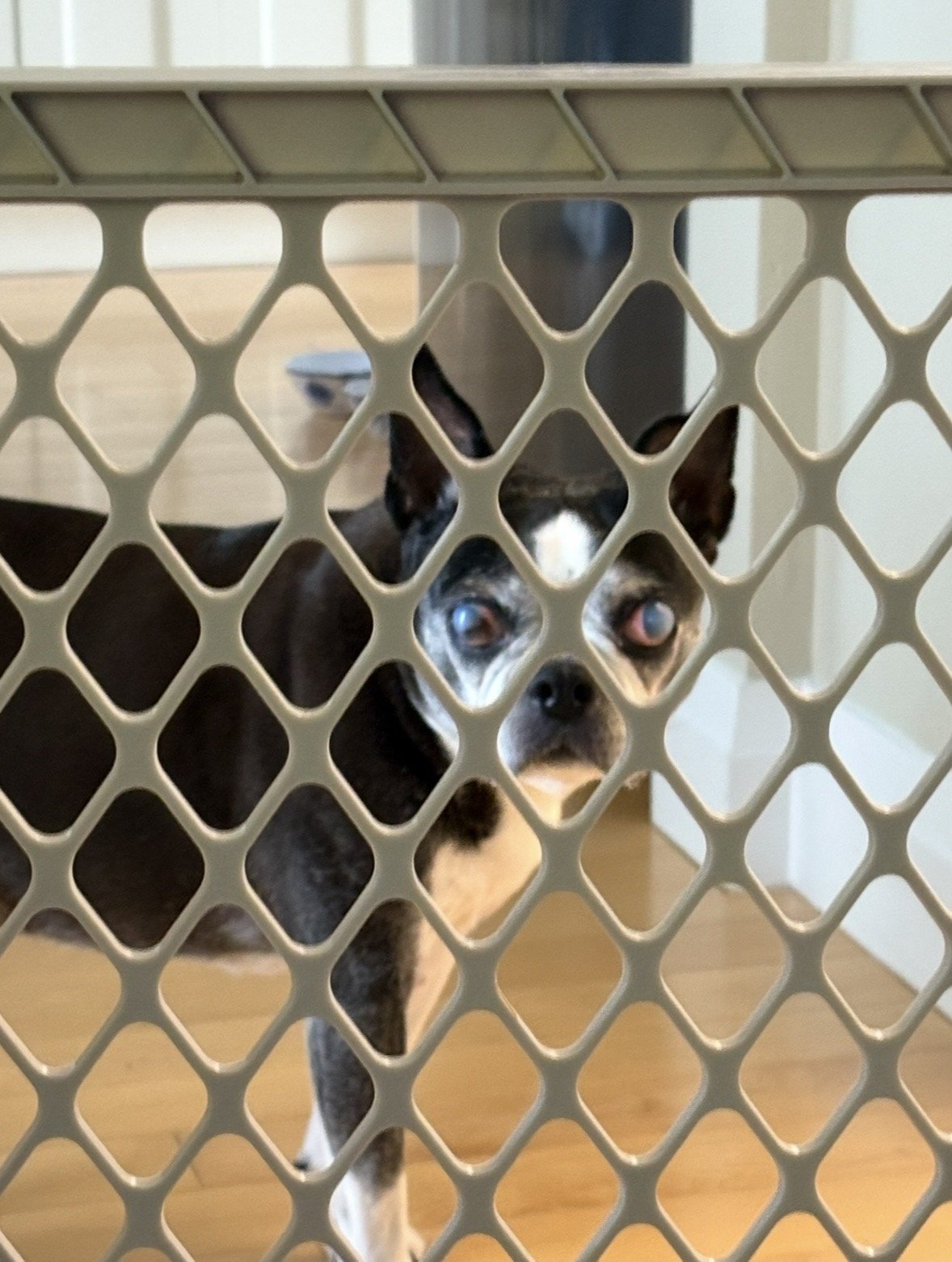
Baby gates aren’t just for babies, they’re for everyone’s safety, and there’s absolutely no shame in using them well past the crawling stage. Gates help separate playrooms, bedrooms, and quiet pet spaces so everyone gets what they need. Pets can relax without being climbed on, and kids can play freely without temptation or having their toys ‘borrowed’ and with that, slobbered on.
We also teach that certain areas are pet-only zones. Whether it’s a cage, aquarium, crate, bed, or favorite sunny spot on the couch, those spaces are off-limits to kids. If you’re pet is confined to a crate, teaching kids that the barrier means no fingers, toys or treats go inside may not be the easiest rule for them to follow, but with constant coaching and repetition, they’ll (kind of) figure it out. Respecting rest areas helps children understand personal space and consent in a very tangible way.
3. Practice Pretend Play and Responsibility
Toddlers genuinely want to help. They are eager beavers when it comes to involvement and responsibility, and pets provide the perfect opportunity.
Kids can help fill food and water bowls (expect that yes, spills will happen), choose toys, groom gently with supervision, or assist with daily routines. Our kids have always loved ‘helping’ to walk the dog by holding onto a knot in the leash alongside us. I’ll be honest, it’s equal parts adorable and chaotic, but if it gets everyone outside for some fresh air, I’m on board.
These moments build confidence while turning everyday tasks into meaningful connection as a family.
Pretend play matters too. Stuffed animals become practice pets, allowing kids to act out gentle touch, feeding, and giving space when a toy needs a nap or some alone time. This kind of play lays the groundwork for safe habits long before real-life situations pop up.
4. Teach Gentle Touch
“Gentle hands” is practically a household mantra around here. Toddlers learn best through repetition, demonstration, and consistency. We physically guide using actions, move slowly, and talk through what we’re doing.
Our hands pet backs, not faces
We sit beside, not on
Let’s give our pets space while eating (even for tiny treats)
Watch for signals like ears back, tails tucked, or bodies pulling away
Clear language paired with consistent modeling helps kids just ‘get it’, even if it takes some time. Eventually, little ones start to self-correct and even remind others, which is always a quiet parenting win. Sibling arguing over how to correctly offer a treat is a-OK in our household.
5. Read and Respect Pet Signals
Animals are always communicating, just not with words. Teaching toddlers to recognize and respect those signals is one of the most valuable lessons we can offer. It’s also ironic, that we spend the first few years of our child’s life figuring out that they’re trying to tell us all the same.
We talk about signs that mean a pet is done playing: walking away, hiding, stiff posture, yawning, growling, or snuggling up in one of the kid-free zones we’ve created for them. When little ones eventually learn that walking away isn’t rejection but communication, they’re less likely to chase or push for more interaction.
This lesson reaches far beyond pets. It teaches emotional intelligence, empathy, and consent - skills that support healthy relationships for years to come.
Build a Safe, Loving Relationship
The bond between kids and pets can be truly unbreakable. With guidance, rules and a whole lot of patience, it can also be safe, respectful and heart-warming for everyone involved. It can also cause toddler and fur-mamas alike to have to pay for extra monthly iCloud storage, just to house the thousands of adorable can’t-miss photo moments.
Practicing safe play with pets isn’t about limiting connection, it’s about protecting it. When we teach our children how to interact thoughtfully and advocate for our animals’ needs, we create a home where trust grows on both sides.
And just like in those early newborn days, your pet may very well become your child’s protector, comforter, and constant companion for years to come. Slobber, scales, feathers, fur, and all.
